
Cart
0
Customer Support
Installation help, troubleshooting, warranty and product registration for your LOCKSET4U door hardware.
Installation Videos
Watch how to install your LOCKSET4U lock set step by step.
Quick Diagnostic Test
Before assuming the product is defective, please perform this short test.
1Door OPENTest the latch, thumb piece, lever, deadbolt thumb-turn and key.
2Door CLOSEDIf everything works smoothly, close the door and test again.
3Works open, not closedInvestigate door and strike alignment, not the lock mechanism first.
4Does not work even openCheck installation: spindle position, backset, screw tension and cylinder/tailpiece alignment.
Troubleshooting
Most lockset problems are caused by door alignment or installation, not by a defective lock.
1. Deadbolt is difficult to turn after installation
Test: Open the door and operate the deadbolt with the thumb-turn and then with the key. If it works smoothly while the door is open but becomes difficult when the door is closed, the lock itself is probably not the first thing to investigate. The deadbolt and strike opening are likely misaligned, or the bolt pocket does not provide sufficient clearance.
Fix: Check that the strike plate is centered on the deadbolt, that the bolt can enter without touching the top, bottom or sides, and that the hole behind the strike is deep enough. About 1 inch (25 mm) of depth is needed for full deadbolt travel.
2. Key turns very hard / thumb-turn is stiff even with the door open
This is different from strike-plate misalignment.
Loosen the two deadbolt mounting screws slightly and test again. If operation becomes smooth, the interior and exterior assemblies may have been installed slightly off-center or overtightened.
Also check that the exterior cylinder tailpiece passes through the deadbolt mechanism correctly and enters the thumb-turn assembly without being forced sideways.
Tip: Do not fully tighten the mounting screws until the cylinder, deadbolt and thumb-turn are aligned and operate smoothly.
3. Deadbolt works with the door open but won't lock with the door closed
This is almost always an alignment issue.
Close the door normally – don't push, pull or lift it – and try the deadbolt. If you have to push or pull the door before it locks, inspect the latch/strike alignment and door position. Check whether the lower latch/strike is putting load on the door and consequently causing the upper deadbolt to bind.
Possible fixes include adjusting the strike plate, checking loose hinges, tightening hinge screws, or enlarging/repositioning the bolt pocket where appropriate.
4. Latch doesn't retract when pressing the exterior thumb piece
Check the spindle connection first.
The exterior handle set spindle must properly engage the latch mechanism. If the spindle is beside, above/below, or incorrectly oriented relative to the latch opening, pressing the thumb piece won't fully retract the latch.
Also check that the latch backset matches the door preparation.
5. Latch works but doesn't spring back
Remove the interior handle/lever and test the exterior mechanism. Then loosen the mounting screws slightly. If the latch begins returning normally, the assembly was likely overtightened or misaligned.
Also check that the latch moves freely by itself before installing the handles.
Recommended installation sequence: latch alone → exterior handle → interior handle loosely → test → final tightening.
6. Door latch won't catch the strike plate
Look at where the latch contacts the strike.
If it hits above or below the opening, check door sag and hinges before modifying the lock. If alignment is only slightly off, repositioning the strike plate may solve it.
If the latch enters the opening but doesn't fully engage, check the depth and dimensions of the pocket behind the strike. Inadequate pocket depth or an incorrect strike position is a common cause of doors that won't latch.
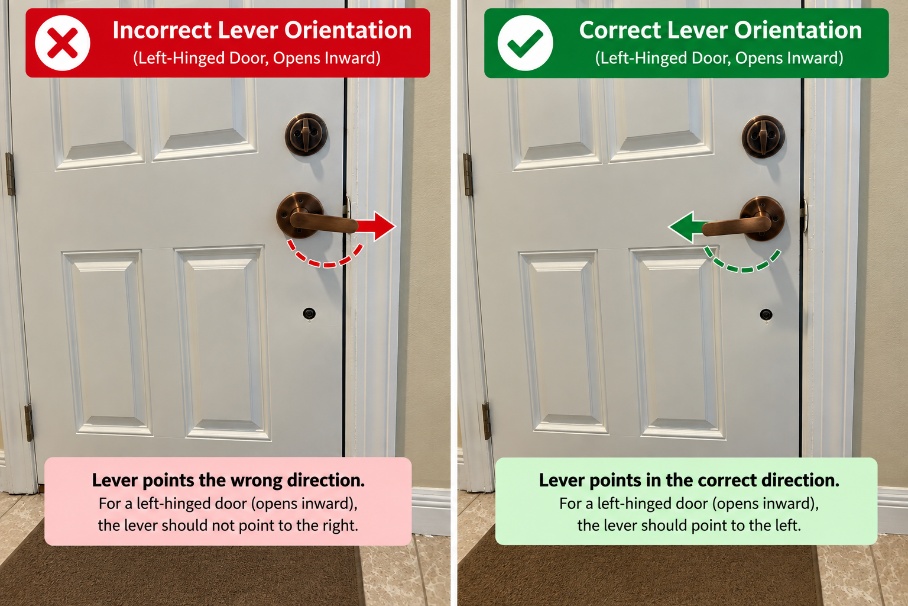
7. Lever points the wrong direction
For a reversible handleset, remove the interior lever according to the model's release method, reverse its orientation, and reinstall it.
8. Exterior grip handle doesn't line up with the existing bottom hole
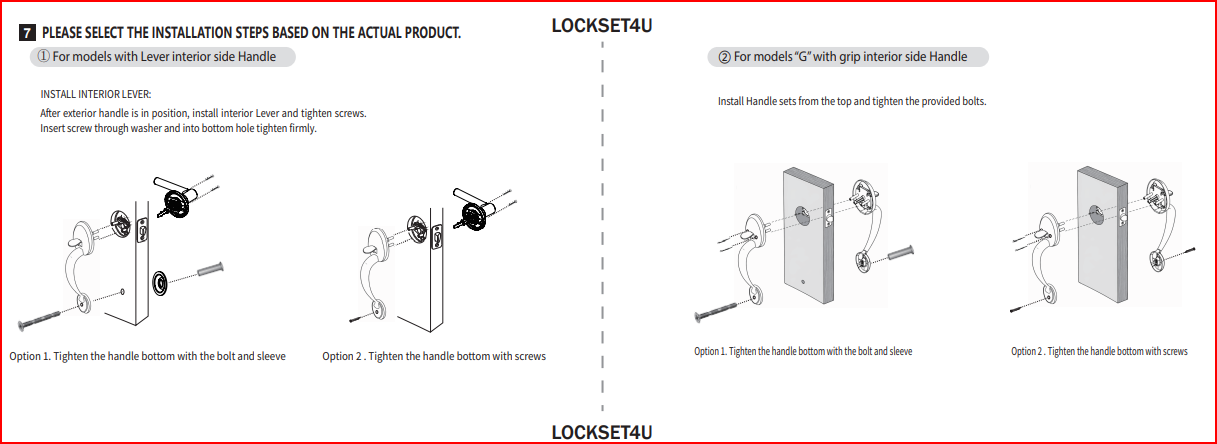
LOCKSET4U handlesets can accommodate two mounting approaches:
- Option A – Through-bolt: use the existing lower through-hole with the connecting bolt and sleeve nut.
- Option B – Screw mounting: if the existing hole doesn't match the new handle's mounting position, secure the lower handle with the appropriate screw arrangement and cover the obsolete hole with the supplied cap where your model/instructions permit it.
9. Latch was installed backwards
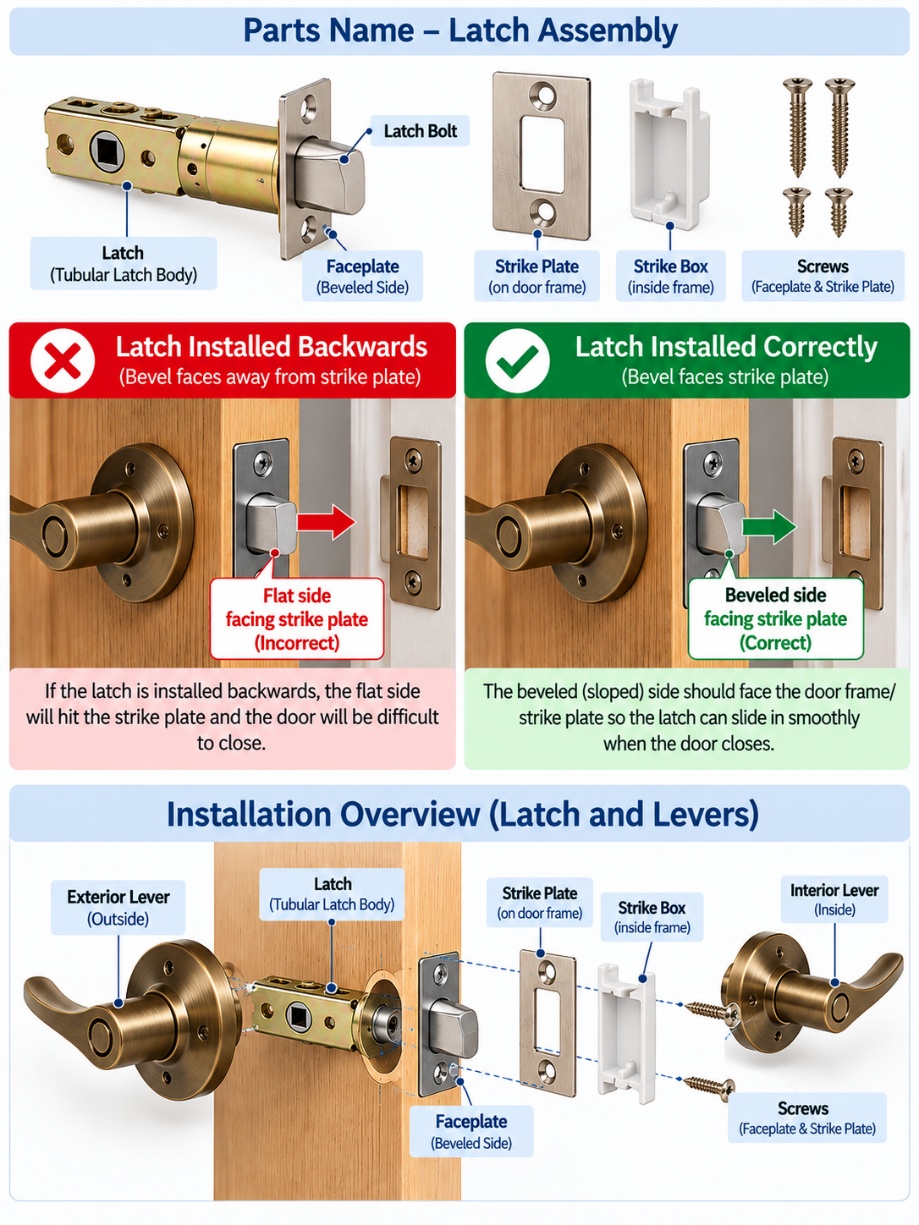
If the door will not close smoothly or the latch catches against the strike plate, check the latch orientation. The beveled side of the latch must face the strike plate/door frame. If installed backwards, remove the latch, rotate it 180°, and reinstall it in the correct direction.
10. Backset is wrong: 60 mm vs 70 mm
This can produce several symptoms: handles don't align with the latch, the spindle doesn't engage properly, the cylinder assembly doesn't sit correctly, or the mechanism binds after tightening.
Both the latch and the deadbolt should be configured for the same door backset: 2-3/8″ (60 mm) or 2-3/4″ (70 mm).
Frequently Asked Questions
Below are the most common questions about LOCKSET4U door hardware.
How do I install the door lock?
Follow the step-by-step installation instructions included with the lock. Make sure the latch, exterior handle, interior handle, and thumb-turn are positioned correctly before tightening the screws.
How do I know if the lock will fit my door?
Check your door thickness, backset, and existing door-hole dimensions before installation.
What should I do if the latch does not fit correctly?
Make sure the latch is installed in the correct direction and that the door hole is properly aligned. Do not force the latch into place.
What should I do if the door handle does not move smoothly?
Loosen the installation screws slightly and check that the lock components are properly aligned. Over-tightening can prevent the handle from operating smoothly.
What should I do if the key does not turn smoothly?
Check that the lock is properly aligned with the door frame. Test the key while the door is open. If it works with the door open but not when closed, the latch and strike plate may need adjustment.
What should I do if the interior thumb-turn does not work correctly?
Check that the interior lock components are installed in the correct position and properly aligned. Make sure the screws are not over-tightened.
What should I do if the lock becomes loose?
Check all installation screws and tighten them securely. Do not overtighten, as this may affect the operation of the lock.
What should I do if the door will not close properly after installation?
Check the alignment between the latch and the strike plate. The latch should enter the strike plate smoothly without excessive force.
What should I do if I have missing or damaged parts?
Please contact customer support at support@lockset4u.com with your order number and a photo of the missing or damaged part. We will assist you with the next steps.
Can I install the lock myself?
Professional installation is strongly recommended to ensure the lock is installed correctly and operates safely and smoothly. If you choose to install the lock yourself, carefully follow all installation instructions and verify that all components are properly aligned before use.
What should I do if I installed the lock incorrectly?
Do not force the lock or handle. Review the installation instructions and check the position of the latch, handles, and interior thumb-turn. If you still need help, contact customer service.
Still need help?
Write to us with your order number, product model and, if possible, a photo or short video of the problem.